
You can't stop ebook piracy completely, but you can make it much harder and get pirated copies removed quickly. Protect your files with DRM or watermarks, watch for your titles online, and send DMCA takedown notices to the hosting site and to Google.
Piracy also matters more than it used to. In 2026, a court approved a record settlement over books taken from pirate sites to train AI, which shows how far a pirated copy can travel.
This post is general information, not legal advice. For a specific case, talk to a copyright attorney.
Key takeaways
- You don't need a lawyer or a copyright registration to send a DMCA takedown notice.
- Register your book early. Statutory damages and attorney's fees require registration before the infringement starts or within 3 months of publication.
- DRM blocks casual sharing. Social DRM (watermarking) helps you trace a leaked copy to its buyer.
- Google can remove pirate pages from search results, but the file may still exist on the pirate's server. Send notices to both.
- Pirated books are now an AI training issue, not just a lost-sales issue.
What counts as ebook piracy?
Ebook piracy is copying, uploading, sharing, or selling your ebook without your permission. It counts whether or not the person makes money from it.
A pirated copy might appear on a file-sharing site, a "free ebook" download page, or a so-called shadow library that collects thousands of books.
Not every use of your words is piracy, though. U.S. law allows fair use, such as quoting a passage in a review, in a classroom, or in research. Courts weigh four factors: the purpose of the use, the nature of the work, how much was used, and the effect on the market for the original. You can read more on the U.S. Copyright Office's fair use page.
A full copy of your book posted for anyone to download is not fair use.
Why ebook piracy matters more in 2026
For years, the main cost of piracy was lost sales. Now pirated books can also end up training AI systems.

On July 20, 2026, a federal judge approved a $1.5 billion class settlement between AI company Anthropic and authors whose books were downloaded from pirate websites and used to train its AI. Authors receive about $3,000 per book, according to the Associated Press.
The case drew a clear line. An earlier ruling found that training AI on lawfully bought books was fair use. Downloading millions of books from pirate sites was not.
For authors, the lesson is simple. Once your book is on a pirate site, you no longer control where it goes. That makes both prevention and fast removal worth the effort.
AI copyright cases are still moving through the courts. Rulings and settlement terms may change after this post is published.
How to prevent ebook piracy
1. Register your copyright
You own the copyright the moment you write your book. Registering it with the U.S. Copyright Office still gives you important advantages.
For U.S. works, you must register before you can sue for infringement. Statutory damages and attorney's fees are only available if you register before the infringement starts, or within three months of publication (17 U.S.C. 412).
An easy habit: register each book within three months of its release.
Registration fees and processing times are set by the U.S. Copyright Office and change over time. Check copyright.gov for current fees.
2. Protect the file with DRM
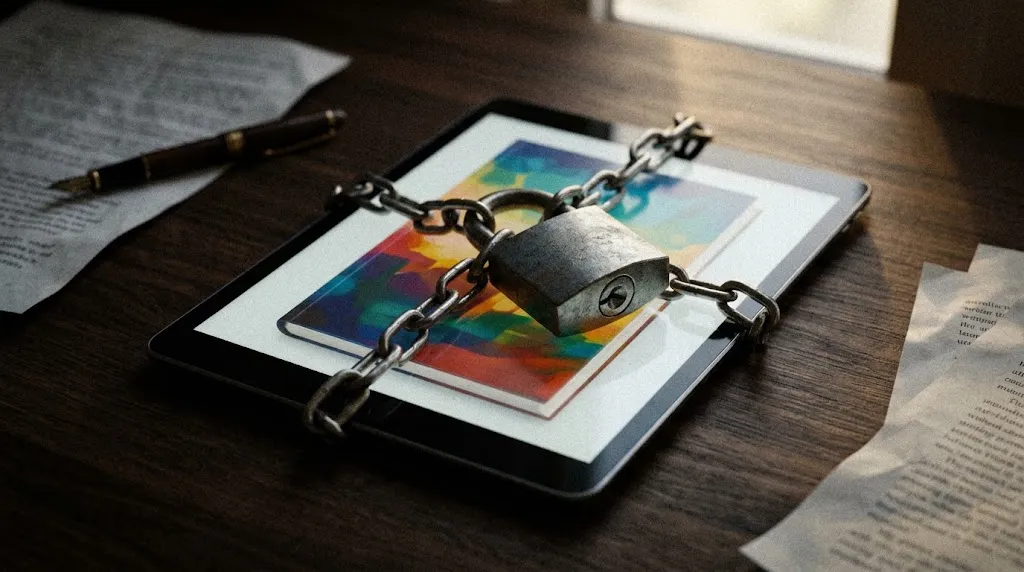
Digital rights management (DRM) encrypts your ebook so it only opens for the person who bought it. Adobe DRM and Readium LCP both work this way.
This stops the most common kind of piracy: a buyer forwarding the file to friends or uploading it in seconds.
3. Use social DRM for an easier reading experience
Social DRM, also called watermarking, doesn't lock the file. Instead, it adds the buyer's details to each copy, either visibly or invisibly.
Readers can open the book in any app. If a copy leaks, you can trace it back to the purchase.
4. Don't host files at a public link
Never put your ebook in an open folder on your website, such as yoursite.com/files/mybook.pdf. Anyone who finds or guesses the link can share it.
Deliver each file through an order-based download instead, so the book only reaches paying customers.
5. Set up alerts
Create a free Google Alert for your book title and your author name. Google emails you when new pages mention them.
How to find pirated copies of your ebook
Pirated books are usually listed under their real titles, so a few searches go a long way.
- Search your exact title in quotes, plus words like "epub," "pdf," or "free download."
- Check your Google Alerts every week.
- Use the Romance Writers of America piracy toolkit. It lists common pirate search phrases and step-by-step takedown tutorials.
When you find a copy, save the full URL and take a dated screenshot. You'll need the exact location for your takedown notice.
How to get pirated copies taken down
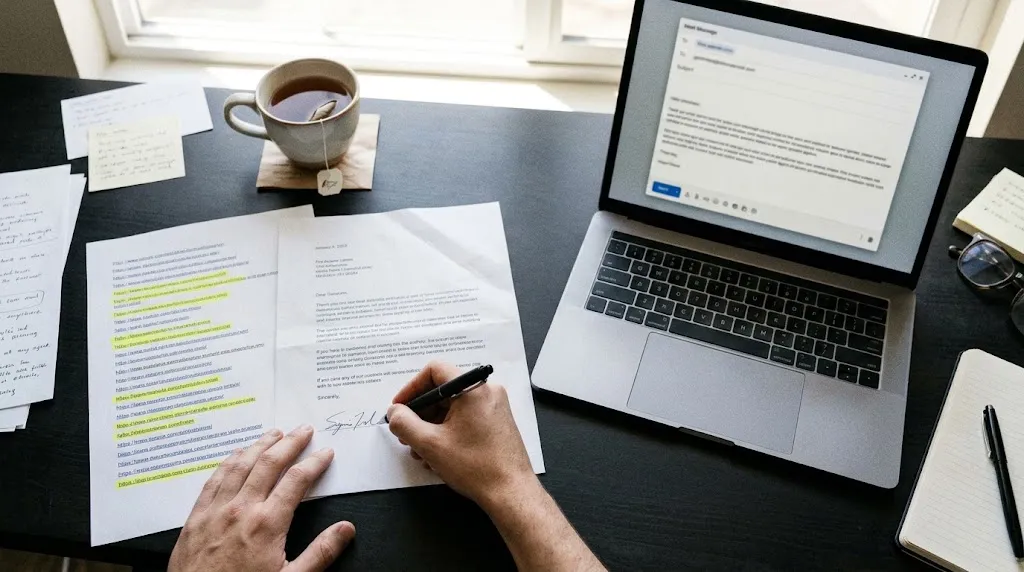
The Digital Millennium Copyright Act (DMCA) gives you a free way to ask websites to remove pirated copies. According to the U.S. Copyright Office, you don't need a lawyer, and you don't need to register your copyright before sending a notice.
- Collect the evidence. List every infringing URL and keep your screenshots.
- Find the site's DMCA agent. Search the Copyright Office's DMCA Designated Agent Directory, or search the site itself for "DMCA." Many sites have their own takedown form.
- Send a DMCA takedown notice. The Copyright Office offers a free sample notice. Your notice must include:
- your physical or electronic signature
- the work being infringed (your book)
- the infringing material and where to find it (the URLs)
- your contact information
- a statement that you believe, in good faith, that the use is not authorized
- a statement that the notice is accurate and, under penalty of perjury, that you own the copyright or are authorized to act for the owner
- Ask Google to remove the search result. Go to Google's Report content for legal reasons page, choose Google Search, and follow the copyright steps. This hides the page from search results, but the file can stay on the pirate's server. That's why step 3 matters too.
- Watch for a counter-notice. The person who posted your book can dispute your notice. If they do, the host may restore the file after 10 to 14 business days, unless you tell the host you have filed a court action.
- Consider legal action for bigger cases. You can sue in federal court or file with the Copyright Claims Board, a small claims option for disputes up to $30,000.
One important warning: only send notices for content you own or are authorized to protect. Knowingly making false claims in a takedown notice can make you liable for damages and legal fees, so think about fair use before you send.
Forms, fees, and claim limits can change. Check the U.S. Copyright Office and Google Legal Help for current details.
How EditionGuard helps protect your ebooks
Prevention and takedowns work best together. EditionGuard covers the prevention side.
Every EditionGuard plan includes Adobe DRM, Readium LCP, and two social DRM options, EditionMark and EditionLink. That means you can pick the right protection for each title. Hard DRM stops casual sharing. Social DRM keeps reading easy and helps you trace a leak to its source.
EditionGuard also fulfills each order for you, so your files never have to sit in a public folder on your website.
Compare EditionGuard's DRM options to find the right fit, or start a free 14-day trial.