



"Good writing is bad writing well edited," wrote author and innovator Kevin Ashton in his book "How to Fly a Horse." Your first draft needs to go on a long journey through revision, editing, and proofreading before it's ready to become an e-book. But working with a professional editor can be expensive.
Freelance editors generally charge between $35 to $75 per hour, according to the Editorial Freelancers Association. This means having your e-book edited professionally can cost you thousands of dollars. If the cost of editing services is prohibitive to you, you will need to edit your own e-book.
Even if self-editing cannot entirely replace working with a professional editor, there are several tools you can use to bring your e-book closer to publication. A self-editing checklist is one of them.
 When your first draft is complete, put it aside for a few weeks. Letting some time pass between writing and editing will allow you to be as objective as possible when you start editing.
Some writers put their draft away for more than a year to be able to look at it from the perspective of a reader. However, this might not be practical if you need to meet a deadline. Whether it's a few days or a few weeks, leave as much time as possible between writing and editing.
When your first draft is complete, put it aside for a few weeks. Letting some time pass between writing and editing will allow you to be as objective as possible when you start editing.
Some writers put their draft away for more than a year to be able to look at it from the perspective of a reader. However, this might not be practical if you need to meet a deadline. Whether it's a few days or a few weeks, leave as much time as possible between writing and editing.
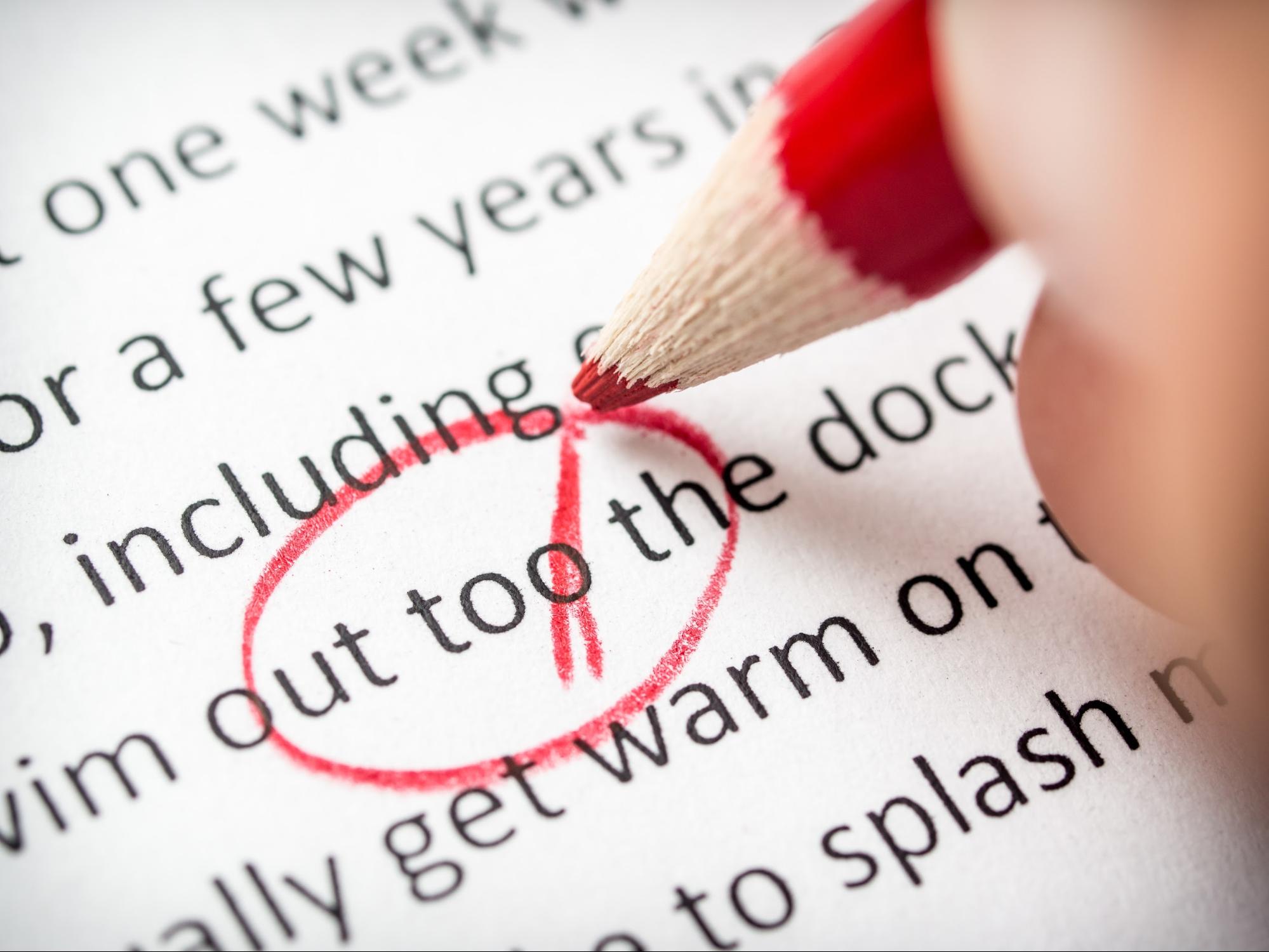
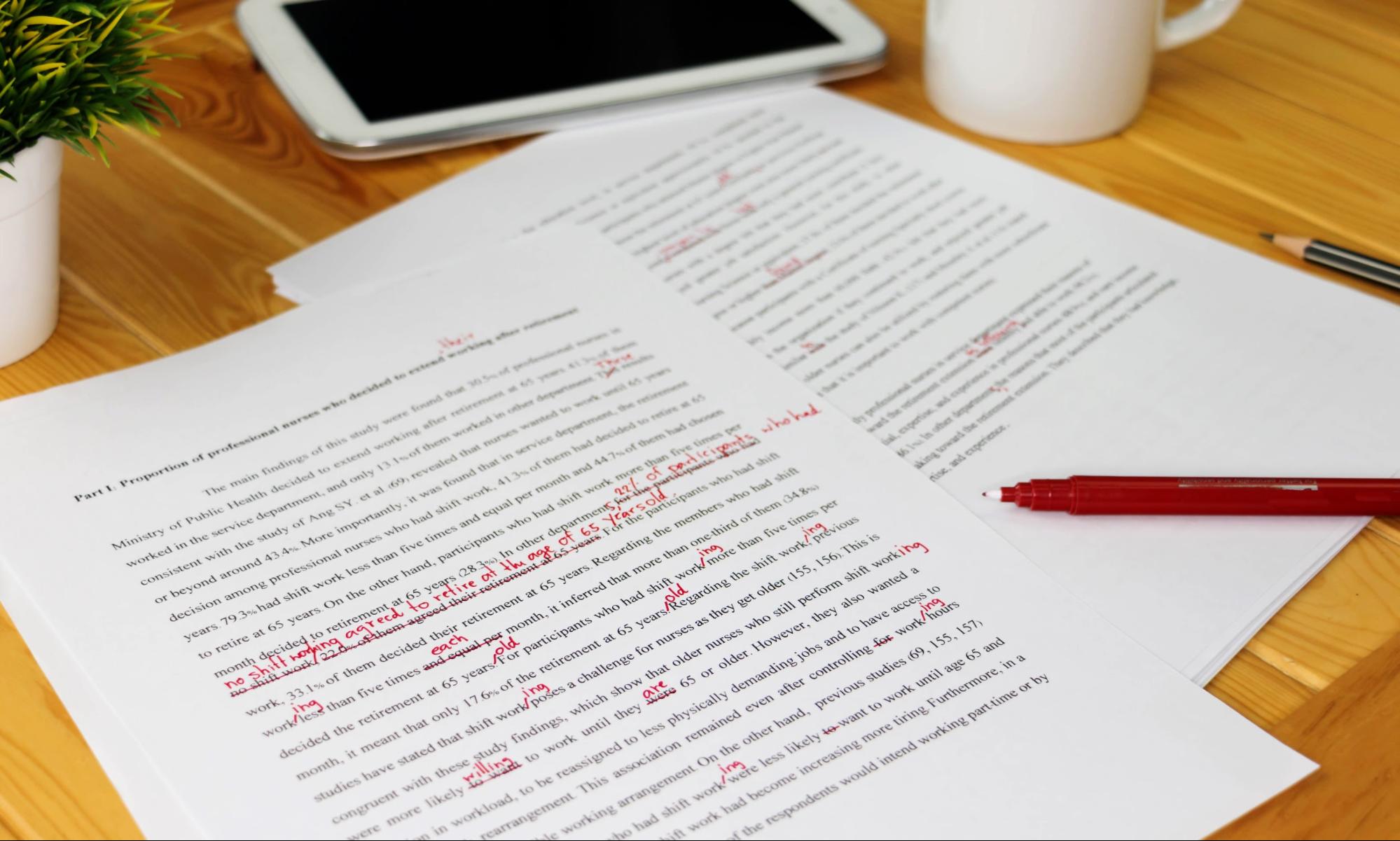 Just like spelling and grammar, punctuation is an essential tool in your writer's toolbox. Use exclamation points, ellipses and dashes sparingly, and use italics — not all caps — for emphasis.
Grammar checkers can detect some punctuation errors, but not all of them. Mastering punctuation rules and correctly applying them is the only way to make your text clear and easy to read.
Incorrect punctuation can change the meaning of a sentence, so punctuate your sentences the right way to prevent confusion.
Just like spelling and grammar, punctuation is an essential tool in your writer's toolbox. Use exclamation points, ellipses and dashes sparingly, and use italics — not all caps — for emphasis.
Grammar checkers can detect some punctuation errors, but not all of them. Mastering punctuation rules and correctly applying them is the only way to make your text clear and easy to read.
Incorrect punctuation can change the meaning of a sentence, so punctuate your sentences the right way to prevent confusion.
Before You Start Editing Your E-Book
When your first draft is complete, put it aside for a few weeks. Letting some time pass between writing and editing will allow you to be as objective as possible when you start editing.
Some writers put their draft away for more than a year to be able to look at it from the perspective of a reader. However, this might not be practical if you need to meet a deadline. Whether it's a few days or a few weeks, leave as much time as possible between writing and editing.
10-Step Editing Checklist
This editing checklist provides foundational guidance, regardless of your genre. Adapt these steps to best suit your unique needs. The goal of editing remains consistent: effectively communicating your message.
1. Identify Major Flaws
Before you start editing your book for grammar or style, you need to fix any major flaws that you might have missed during writing or revision. The errors to look for include logical fallacies, repetitions of ideas, contradictions, and missing information. To identify these flaws, read the draft in one go if you can. During this first step, you need to focus on the forest, not on the trees. So, try to resist the urge to correct the spelling or punctuation mistakes you come across. To spot the major errors in your draft, read it in a quiet place, away from distractions. By finding and resolving any significant issues at this early stage of editing, you'll avoid rework and frustration later.2. Check Your Facts
Whether your e-book is about finance, travel or wellness, presenting correct information to the reader is essential if you write nonfiction. If you write fiction, your story needs to be credible, and fact-checking helps you create a realistic setting for your story. Verify all things that can be verified — numbers, statistics, and names of organizations, people, and places. Also, check that all web links work and point to the right site. If you're new to nonfiction writing and fact-checking, Poynter's News University has a free course called "Hands-on Fact-Checking: A Short Course."3. Edit Your E-book for Grammar
"Bad grammar produces bad sentences," said Stephen King. To correct the grammatical mistakes in your draft, you need to know the rules and when it's OK to bend them. Subject-verb agreement errors, dangling participles, misplaced modifiers, and parallel structure errors are some of the most common mistakes writers make. There's no substitute for a good grammar book, but apps like Grammarly, Hemingway or any writing platforms out there mostly come with automated grammar checkers that will help you identify errors you tend to miss. An e-book free from grammatical mistakes proves you care about your writing.4. Edit Your E-book for Spelling
While most readers will turn a blind eye to a few typos in your e-book, a publication full of spelling mistakes will harm your credibility. Typos in a book make people think that it contains not only sloppy spelling but also sloppy research. Also, some typos can be offensive, so be very careful when you check your e-book for spelling. Once you've manually spell-checked your book, use a spell-checker to find and correct any remaining typos. But don't rely on spell-checkers, because no app can find all the mistakes in your book.5. Check the Punctuation
Just like spelling and grammar, punctuation is an essential tool in your writer's toolbox. Use exclamation points, ellipses and dashes sparingly, and use italics — not all caps — for emphasis.
Grammar checkers can detect some punctuation errors, but not all of them. Mastering punctuation rules and correctly applying them is the only way to make your text clear and easy to read.
Incorrect punctuation can change the meaning of a sentence, so punctuate your sentences the right way to prevent confusion.