



Running an ecommerce store on a small budget can feel limiting, but budget is not the only factor that determines whether your store grows. A large ad budget can help you reach more people, but it cannot fix unclear messaging, weak product positioning, poor follow-up, or content that does not answer what buyers actually need to know.
For authors, publishers, and digital product sellers, the goal is not to be everywhere. The goal is to focus on the channels that create trust, bring qualified traffic, and help people make a purchase decision. Shopify recommends using a marketing budget to track how much you spend, where that money goes, and what each channel returns. That matters even more when funds are limited.
Start With the Basics: Traffic Alone Is Not Enough
More traffic can lead to more sales, but only if the right people are visiting your store. Before spending money on marketing, make sure your ecommerce store is ready to convert visitors.
Your product pages should clearly explain what the customer is buying, who it is for, how they will receive it, and what happens after purchase. If you sell ebooks, for example, customers should understand the format, reading options, access instructions, refund policy, and any digital rights management requirements before they buy.
A simple store with clear product pages, strong calls to action, and a smooth checkout process will usually perform better than a store that gets traffic but leaves buyers confused.
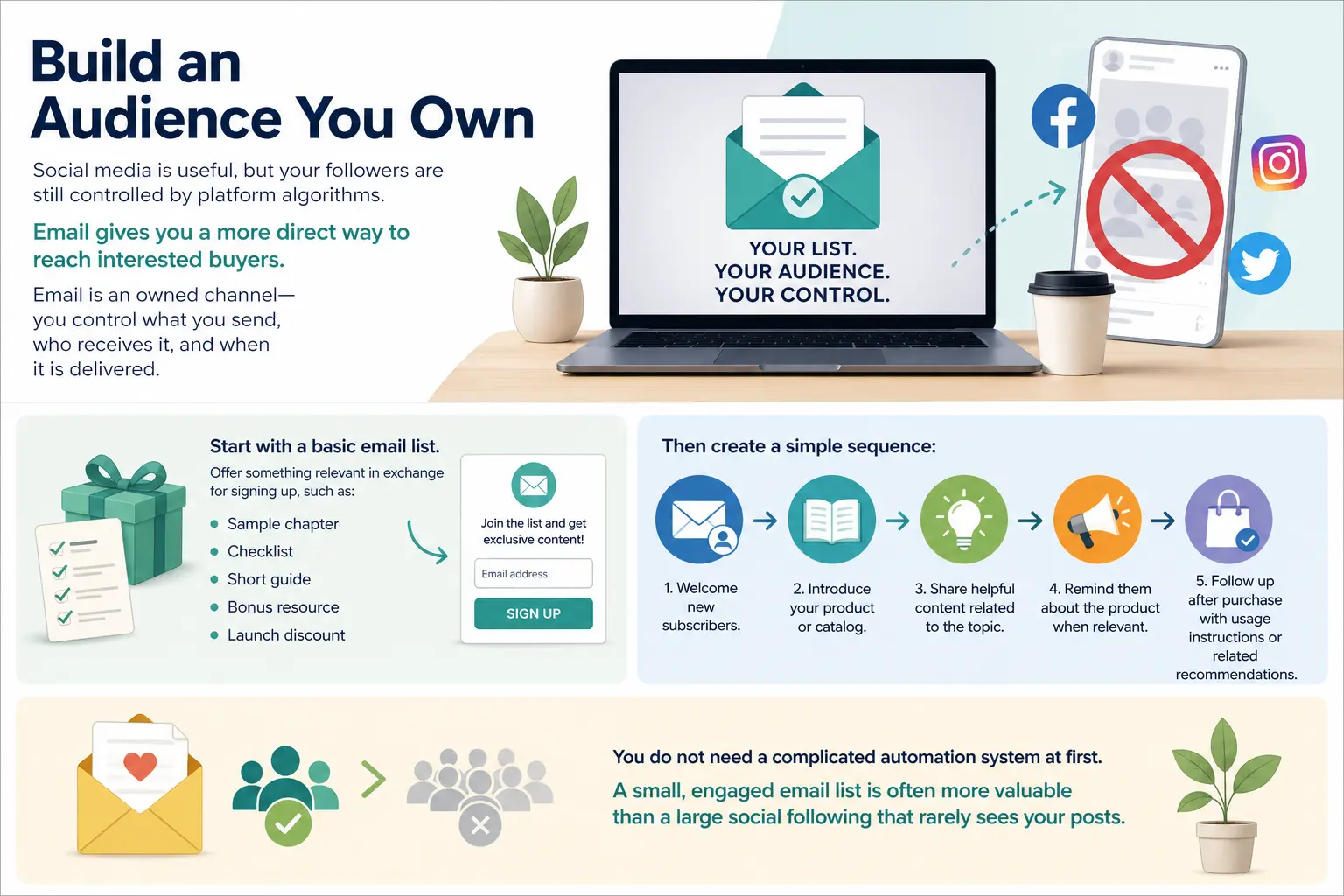
Build an Audience You Own
Social media is useful, but your followers are still controlled by platform algorithms. Email gives you a more direct way to reach interested buyers. Mailchimp describes email as an owned channel because you control what you send, who receives it, and when it is delivered.
Start with a basic email list. Offer something relevant in exchange for signing up, such as a sample chapter, checklist, short guide, bonus resource, or launch discount. Then create a simple sequence:
Welcome new subscribers.
Introduce your product or catalog.
Share helpful content related to the topic.
Remind them about the product when relevant.
Follow up after purchase with usage instructions or related recommendations.
You do not need a complicated automation system at first. A small, engaged email list is often more valuable than a large social following that rarely sees your posts.
Create Useful Content That Helps Buyers Decide
Content marketing is still one of the most cost-effective ways to bring traffic to an ecommerce store, but the standard is higher now. Google states that its ranking systems are designed to prioritize helpful, reliable, people-first content rather than content created only to manipulate search rankings.
For ecommerce, this means your content should answer real buyer questions. If you sell ebooks, useful topics may include:
How to choose the right ebook format.
How to read protected ebooks on different devices.
How to organize digital study materials.
What to look for before buying a professional guide, manual, or textbook.
How to use an ebook after purchase.
The best content reduces hesitation. It gives potential buyers enough information to trust the product and understand how it fits their needs.
Shopify also emphasizes audience research, pain points, SEO, content calendars, content clusters, and ROI tracking as part of effective ecommerce content marketing. Instead of publishing random posts, group related topics together. For example, an ebook seller might create a cluster around “ebook access,” with articles about file formats, reading apps, device access, DRM, and troubleshooting.
Build a Community, Not Just a Following
A community is different from an audience. An audience consumes your content. A community interacts, asks questions, shares experiences, and gives you insight into what customers actually care about.
This can happen in a Facebook Group, private newsletter, reader community, LinkedIn group, Discord server, or niche forum. Meta provides business resources for creating and managing Facebook Groups as a way to build online communities.
For an ebook store, a community might be built around a topic rather than the store itself. For example, a publisher selling business ebooks could build a group for small business education. An author selling exam prep materials could build a community for test-takers. The product becomes part of the solution, not the only reason people are there.
The key is to avoid turning the community into a constant sales feed. Share useful tips, answer questions, ask for feedback, and use the community to understand what your next product, offer, or content topic should be.
Work With Niche Influencers and Partners
Influencer marketing does not have to mean paying a celebrity or large creator. For small ecommerce stores, niche creators, bloggers, newsletter owners, educators, reviewers, and community leaders can be more relevant.
The best partner is not always the person with the most followers. It is the person whose audience matches your buyers. An ebook about creative writing may perform better with a small writing coach’s newsletter than with a large general lifestyle account.
You can offer partners a review copy, affiliate commission, exclusive discount code, guest content, or bundled resource. Keep the arrangement clear. If someone receives payment, free products, discounts, or any other incentive to promote your product, the relationship should be disclosed. The FTC states that material connections between a brand and influencer should be made obvious, and disclosures should be hard to miss.
Repurpose Everything
A small budget means every piece of content should work harder. One blog post can become several social posts, an email, a short video script, a customer FAQ, and a downloadable checklist. One customer question can become a product page improvement, support article, and sales email.
This keeps your content consistent without requiring you to constantly create from scratch.
Final Thoughts
Marketing an ecommerce store on a budget is not about doing everything for free. It is about spending time and money only where it can create measurable value.
Start with a clear store, useful content, an email list, a community strategy, and carefully chosen partners. Track what brings qualified traffic, what leads to sales, and what helps customers feel confident enough to buy. For more guidance, explore these secure and effective eBook sales strategies to help protect your content while growing revenue.
A small budget can still build a strong ecommerce business when the strategy is focused, consistent, and built around what customers actually need.